Monday, 29 September 2014

Week 53: Multi-engine IFR and the final end of core.

As much as I thought the core phase ended in New Zealand, easyJet's requirement for multi-engine instrument flight in UK airspace meant we had a few more weeks before heading back to Nursling. However, following a relatively good run of weather I completed my final flight on Friday, and now have the rest of the week to relax before heading down to Southampton to commence the Airbus phase. 

As well as the upset recovery training, easyJet wanted us to fly in the UK where the radio procedures are seen by some as a lot more complex. I personally don't agree with this as the instructions we receive from air traffic control are the same, but given the UK's more congested airspace, frequency changes happen often, and with a lot more traffic there is a real need to get things right first time. As good as the MPL programme is for developing well-drilled multi-crew pilots, it's failing is that spending 6 months in a simulator will make the trainee inevitably quite rusty when talking to air traffic. The instructor will be making calls and the trainee will answer accordingly, but nothing can mimic the fast-paced, accent mixed environment that is London Control. 

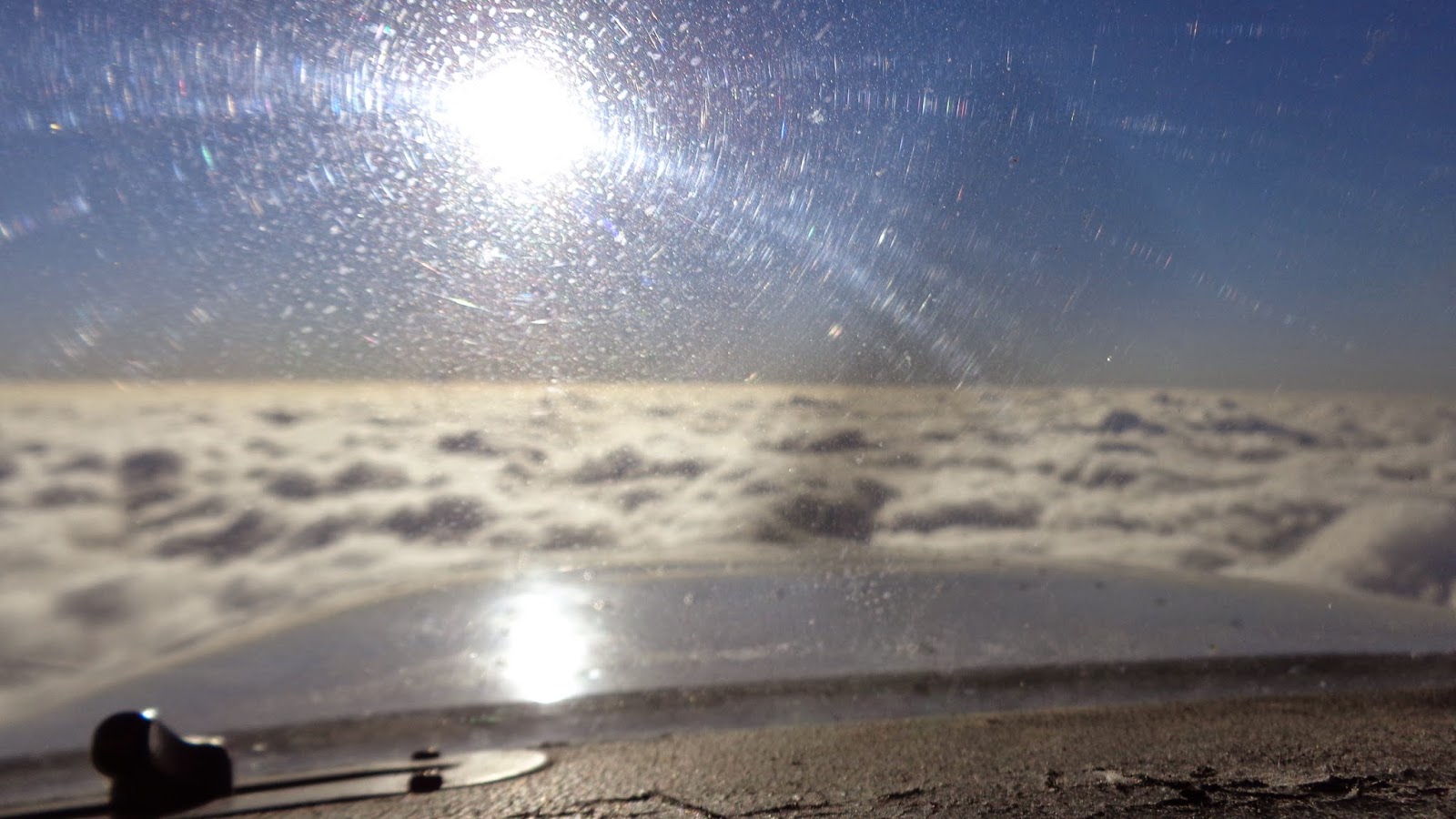
For the TwinStar flights we flew using terrestrial navaids instead of just the GPS system we had been using in New Zealand. To ensure we were confident in their use my instructor Russ planned our flight so that we didn't go far, and therefore had a greater opportunity to practice holding and approaches, rather than just flying for an extended period with the wings level. These flights were quite enjoyable, but the best flight by far was my final TwinStar one on Friday when I took the opportunity to fly south to one of the Channel Islands, Alderney. We went into cloud at about 700ft above Bournemouth, and the first time I saw the earth again (in this case the sea) was at about 3 miles from touchdown, so I had to be disciplined in both my flying and workload management. To keep things interesting Russ failed an engine during the go-around, and engine failure which I had to take back to the hold then onward for another approach. Put simply in a light twin when one engine fails the aircraft is out of balance and wants to steer towards the dead engine. The only way to counter this is with positive control of the rudder, but after 10 minutes with one leg locked out, your muscles are screaming at you to stop upsetting them! Thankfully after the second approach I was given the engine back, and we shot off back to Bournemouth.

Making good time back to Bournemouth I was able to perform two approaches, the first with the autopilot flying us all the way down to decision altitude. It was interesting to watch the aircraft flying itself down the approach in a monitoring role, knowing that I would quickly have to transition from autoflight to manual control. This will feature highly for the rest of my career when visibility is so bad that the automatics are vital for a safe operation, so to see the equipment working was quite cool. On the second approach I hand flew the aircraft under radar advised headings from air traffic, and managed to fluke one of my best landings ever in a light aircraft, which ill never fly again. Typical!

With the rest of the week ill hopefully get some notes to start looking through ahead of starting next Monday, as I have no reservations that once we start time is going to fly by and I need to be sure i've shoe-horned all the knowledge into my head! 

Sunday, 21 September 2014

Week 52: Multi-engine operations = TwinStar time!!

I had another busy week, working through the remainder of the upset recovery flights before moving onto the IFR operations. The second two UPART flight were the more interesting, as they involved the Bulldog as well as upset under Instrument conditions. The Bulldog being able to withstand higher G forces means it's a more capable training device, but for our needs we operated between +3g and -1g. For a bit of fun at the end this also included aerobatics, allowing me to perform a barrel roll before completing the flight. As for UPART 3, we went through some of the previous techniques, but this time were wearing the hood to simulate instrument flight conditions. The risk here is following the 'startle factor' being unsure of what's happening as the brain gets confused, so the rule of always trust your instruments is more important than ever.

Onto the twin engine operations, and things start to get more interesting. We started with a simulator session, where my instructor Russ was pressing home the importance of learning and memorising the engine failure drill. This was a very new scenario, as an engine failing in any previous flights would inevitably lead to a forced landing as there would be no alternate power source to maintain forward speed. Now the aircraft is capable of flight with only half of it's available power, but initially after failures the pilots workload is high and requires the correct actions to be carried out as expeditiously as possible. 

Steph taking us down the approach for rwy08

After the simulator session and a radar vectored instrument approach, I finally got my chance to climb into the front seat of a DA42 TwinStar and work through the multi engine familiarisation flight. All I can say is the flight was awesome, the aircraft a pleasure to fly, and on a personal level I finally feel like I have crossed the bridge from light aircraft operations to commercial flight. The aircraft is heavier than anything else I have flown and consequently carries more inertia, but with increased inertia the aircraft is significantly more stable which makes it slightly easier to fly during instrument operations. I also had my first chance to fly a real ILS approach with visibility of less than 3km; as much as it was mid-morning and therefore relatively still, it was an awesome feeling to see the lead in lights looming out of the mist following the approach.


Unfortunately my second flight was cancel due to thunder activity close to the airfield, but on the upside I got to look around and inside one of the private jets CTC operate, a HS125. The aircraft cabin was very comfortable, but I personally found the flight deck quite cramped (not sure what my mouth's doing!). I probably had the seat in the wrong place, and having my jacket on didn't help, but from memory the flight deck of the A320 is very roomy and I can't wait to get there!


Sunday, 14 September 2014

Week 51: Back in the aircraft

Rather surprisingly the order of my flights has been changed, so on Thursday I actually got to fly an aircraft instead of the simulator which was brilliant. After the week started with 3 days of ground school (can't get away from it, you can see everyone's glee!), the time finally came to get back flying. As Bournemouth is used by CTC for the modular training CPL's (wings take off) and all Instrument rating, there aren't normally any single engine aircraft available for training. However as we needed to work through some upset recovery a DA40 has been brought in, and it's a much nicer aircraft to fly than the Cessna which was like a cow with wings! But before I get comfortable in the DA40, tomorrow i'm getting into the more powerful Bulldog, an aircraft which the RAF used to use as their primary trainer so it's got plenty of poke. I actually have two flights tomorrow so will end the day back in the DA40, then i'm ready for the twin star; excitement doesn't seem like a strong enough word to describe how I feel!


So upset recovery......for those that don't know, in 2009 an AirFrance widebody smashed into the Atlantic during a flight from Rio to Paris, following an encounter with ice. Put simply the probe that indicates the aircraft's airspeed was covered in ice (as were the spares), and without input the autopilot was incapable of maintaining control and switched off. At this point the pilots didn't quite appreciate what was happening, and this lack of understanding and incorrect subsequent actions caused a perfectly serviceable aircraft to hit the ocean in a near vertical descent after the aircraft had stalled. This event has led to pilots now having more emphasis placed on upset recovery training, so they are better able to successfully survive an event. 


In a light aircraft the recovery from pretty much any scenario is possible by pointing the nose down and applying full power. Unfortunately, in a large airliner applying power could make the situation worse, and with passengers potentially wandering round the cabin throwing the aircraft round isn't the best idea. Instead the pilot should try and avoid any power changes, whilst limiting control inputs to avoid excessive g forces. It doesn't sound overly dramatic, but as the course is multi-crew orientated all recoveries must be verbalised (ie. talk through the recovery as it's happening) so that the other pilot is aware of the pilot who's flying's thought process. 

Being in Bournemouth has also come with some added bonuses, one of which is the fact we are living a five minute walk from the beach. With the sun doing it's best to shine we've been enjoying the sand, and i'd like to think my photos do it justice (Alice clearly enjoying the sunset). Hopefully the weather stays fine, so the flights happen quickly and we can move on sooner. 

Another treat of being at Bournemouth is that CTC's parking area is next to an active taxiway, so I enjoyed a Boeing 747sp taxi past which is someones private jet, and a three ship of classic RAF jets came in including a Canberra and two Hunters. On Friday there were also two Lancaster's in ready for the weekend's Goodwood revival, but sadly I missed out on the hum of 8 Merlin engine's as I wasn't in. 

I also got to pop up to Essex for a birthday as I had the entire weekend off, always fun! But now i'm prepped for what will hopefully be a busy week of zooming about the South coast. Thank god i'm back, I was losing my mind having so little to do!

Hopefully by next week i'll have had a go in the twin star, and will be a step closer to the Airbus phase. 


Monday, 8 September 2014

Week 50: Off to Bournemouth, ready for the final push.

This week I mostly took the opportunity to enjoy the company of my friends and family before heading back down to the South coast in readiness for my next stage of training. I've been placed with 5 others on my course, and ironically the house we're in is about a mile from the one I lived in during my initial training as an air traffic controller. As a house it's standard student accommodation so nothing particular to complain about, and as we're at the end of a blocked road last night I slept like a log due to the relative silence. 

This morning we were back in the classroom for our induction briefing at CTC's main UK flight training centre, which is on the northern side of Bournemouth airport. After what seemed like a constant stream of introductions we got down to business, straight back into formal tuition concerning UK airspace and our flights we're planned to fly. We actually only have 8 flying events and 4 weeks in which to complete them before we're due over at Nursling for the Airbus phase, so if the weather cooperates we could be done in about 2-3 weeks, with a cheeky bit of leave at the end. However, given EZMP03's luck concerning the weather, i'm not holding my breath!

For tonight it's just a case of settling into the house more and a bit of light reading before more lectures tomorrow. The phrase 'death by powerpoint' was uttered today, and it couldn't be more true; even with time off everyone seems to have left the classroom tired and in need of a nap! Hopefully by the end of the week I will at least have done my first sim, and perhaps even the first upset flight before the weekend, as i'm already pretty sure my instructor's off which means I am too. Enjoy the last of the summer...

Tuesday, 2 September 2014

Week 49: R&R, a wedding and a crumble.

Given we're not due back until the 8th of September, the past week has been spent enjoying some time off to relax and recharge the batteries ahead of the final push. Getting home earlier I have spent a chunk of my time visiting my sister and family, but as she's on the mend I have been able to spend more time with Alice, including a friends wedding on Saturday. I hadn't managed to catch up with all of my friends before starting the course, so it was brilliant to have a few pints and throw some shapes out on the dancefloor.


On Sunday Alice and I cooked a roast for her friends and brother, my job being an apple and raspberry crumble. Now I hadn't made one before so was worried it'd be rubbish, but thankfully no-one made any funny faces and I quite enjoyed it so a small success! 

Unfortunately with the wedding I was unable to get to the Bournemouth air show, which is a first for about 5 years! Thankfully though, when I do get to Bournemouth next week the weather is apparently going to be quite nice for the remainder of September, so I may get a summer after what feels like an eternal winter. I believe CTC's stand at the show was quite popular, and it clearly had the perfect backdrop for attracting interest.

For the rest of the week I plan to continue relaxing, getting my gear together for the next stage, and getting to know my niece a bit better before i'm yanked away for a few months! It's nice to think it's only about 6 months until I start flying passengers, but I have no doubts that the months will fly by and before I know it there will be dozens of holiday makers excitedly boarding my aircraft bound for exotic locations all over Europe. And i'm driving!


Monday, 25 August 2014

Week 47 and 48: Instrument flight and a mad rush to get home.

Apologies for missing an update last week, but unfortunately I was rather distracted by what was going on at home. My sister who was 8 months pregnant had been rushed into hospital, which eventually led to her being in intensive care, so naturally I was desperate to get home sooner to be with her as I felt helpless on the other side of the world. My line manger Troy was fantastic in getting through my flights, and my Instrument instructor Phil even worked overtime to get me finished quicker. The right people were brilliant at the right time, and for that I am hugely appreciative. Obviously it's not something I want to discuss further, but I am now a proud uncle for the first time, baby Annabel my new niece.

 Wellington International from 9000ft

During week 47 I completed my last few simulator sessions in readiness for instrument flight in the aircraft. The last two were flown to represent real flight profiles, from the planning to the workload en route. During my first ops route I could have been quicker with the tasks that needed carrying out, and as I took a leisurely pace earlier I gave myself a bit of a mountain leading up to the approach. Fortunately I sorted this for my final simulator flight, so felt a bit more confident ahead of my first flight in the aircraft. Obviously in keeping with the rest of the course the weather put the brakes on, with a deep layer of cloud and a low freezing level keeping me grounded. This is because flight in cloud above the freezing level will cause icing, and as the Cessna doesn't have any anti-ice equipment the flight couldn't go ahead.

Chasing the sun West

When the weather did show signs of improvement I was lucky enough to be part of a long trip down to the top of the south island, flying the first and the third legs of a three flight day. The best part about the trip was that I was in the back seat when we crossed the Cooke Strait between the North and South islands, so was able to sit back and enjoy the views. Hopefully some of the pictures do it justice.

last time I race the Cessna's shadow whilst training

Luckily for me and my efforts to get home quicker I completed my final flight on Monday afternoon, and after Troy had offered to complete my sign out the next day I was in a position to change my flights. Annoyingly the earliest flight I could get was 48 hours later, but after rapidly completing the sign out and managing to join another cadet who was heading home on the Tuesday, I went to Auckland in the hope of finding some luck. Thankfully I was able to get a flight that evening getting me to Gatwick, and after ~30hrs of almost sleepless travel I made it home.

I've now got a couple of weeks off before my next phrase of training in Bournemouth, time I want to spend helping my sister as much as possible, getting to known my niece and catching up with Alice and my parents. It's not long before the most intimidating part of my training commences, so I plan to use the time off as much as possible. 

Sunday, 10 August 2014

Week 46: Precision is everything

This week included work on the instrument landing system (ILS), an approach method that is considered as 'precision'. It is deemed as more precise as the pilot now has guidance in both azimuth (direction) and elevation (level), and is the principle instrument approach used at most commercial aerodromes. I was looking forward to this one the most as it is the type of approach I will fly for the majority of my career, so the simulator was positioned at Auckland to give it a go.

As previously mentioned the approaches we had worked through were known as 'non-precision'; effectively directional guidance is given to get you to the aerodrome itself, and the pilot must use the advisories on the plate to try and achieve the planned descent profile. These types of approaches can be flown very accurately, but the margin for error is a lot larger than with the ILS, and therefore additional safety factors are built in. The main one is the Minimum descent altitude (MDA); this level is indicated on the plate, and should be seen as the 'descent floor' for the procedure, below which the aircraft must not descend unless they are visual with the runway. The aircraft can fly level at the MDA in the hope of getting visual with the runway, but the longer this takes the steeper the final descent would have to be in order to complete the landing. In the case of Hamilton this is over 500 feet which puts the aircraft about a mile from the airfield, so when there is a combination of poor visibility and low cloud, the pilot is unlikely to complete the approach. 

In comparison the ILS has a 'decision altitude' (DA), a point where the pilot looks out the window to see if they are visual and can continue the approach. In the case of the ILS the aircraft can legally descend below this level, but if a missed approach is to be executed this will have been commenced as the aircraft passes the DA. This isn't as critical as the non-precision approach, as the aircraft would still be receiving track and level guidance, and as long as the aircraft wasn't dangerously low already it won't hit anything. This is prevented with the rule that if there is more than "half scale deflection" on the glideslope indicator, a missed approach must commence. 

This is the primary flight display from an Airbus instrument panel. In the centre is the artificial horizon (AH), the airspeed indicator is on the left (ASI), direction indicator at the bottom (DI), and the altimeter on the right. Between the AH and the altimeter there is a magenta diamond with four dots and a line. This is the glideslope indicator, the top and bottom dots being full scale deflection and the line being the centre. To fly the ideal approach the pilot will plan a rate of descent, then with minor adjustments they should be able to keep the diamond on the line, which will move to indicate what action is required from the pilot. In the case shown the diamond is indicating 'fly up', but this is due to the aircraft intercepting the glideslope from below so there is no issue. If however they get this indication once they had already intercepted the glideslope once, there would be a consideration that a missed approach must follow if the situation isn't rectified. 

For the moment these types of approaches are busy, but certainly manageable as the aircraft is easy to manipulate. When we get into the Airbus however the aircraft will have so much more inertia and is going considerably quicker, so accuracy is key to prevent any errors snowballing. Next up we've got more approaches and then we should be moving onto GPS routes in readiness for our last 5 flights in the Cessna.